Seafood Risotto with White Wine
Highlighted under: Global Feast Collection
I absolutely love making this seafood risotto with white wine. The combination of fresh seafood and creamy Arborio rice creates a dish that's both comforting and elegant. Cooking risotto demands attention, but the results are worth it; it’s a dish that wows my guests every time. Not only does the white wine add depth to the flavor, but it also elevates the overall experience. Trust me, once you try this recipe, you'll want to make it for every special occasion—even just for yourself!
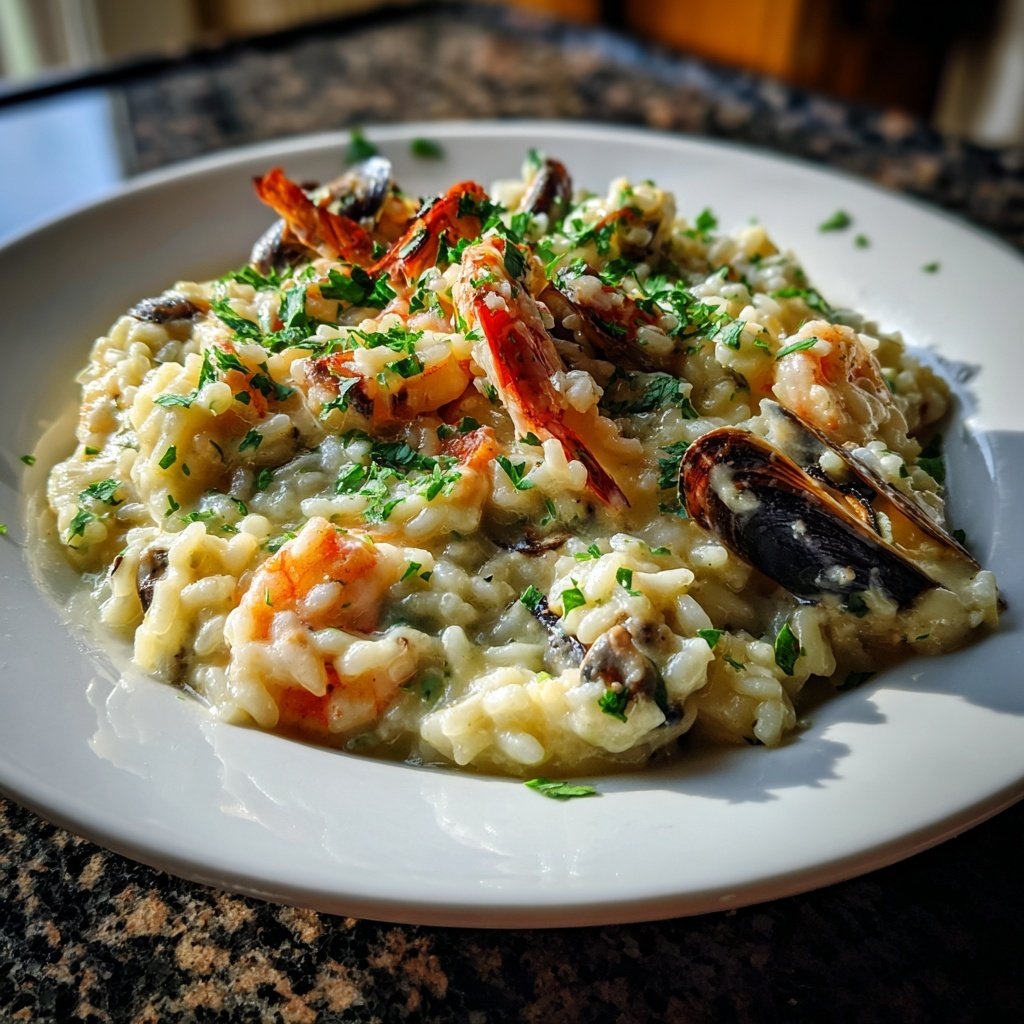
While experimenting with seafood risotto, I stumbled upon a combination of flavors that just worked. I decided to incorporate mussels, shrimp, and squid, each bringing distinct tastes that complemented the dish beautifully. The addition of lemon zest at the end enhances the freshness, and it’s a trick I highly recommend.
One of the keys to achieving the perfect texture is gradual broth addition, allowing the rice to absorb the flavors fully. I learned not to rush this process; it takes patience but results in a creamy risotto that’s simply irresistible!
Why You'll Love This Recipe
- Decadent seafood flavors harmonized with creamy rice
- Elevated with the brightness of white wine
- Perfect for a romantic dinner or family gathering
The Importance of Arborio Rice
Using Arborio rice is crucial for achieving that signature creamy texture of risotto. This short-grain rice has a high starch content, which releases creaminess as it cooks. When you sauté the rice, it helps toast the grains slightly, allowing for a richer flavor. Ensure you are not rinsing the Arborio before cooking; rinsing washes away the starch that contributes to the creaminess. Instead, let it absorb the broth slowly in a process known as 'al dente' cooking, where the rice is tender but still has a slight bite.
If you can’t find Arborio rice, you might use Carnaroli or Vialone Nano, both of which are excellent alternatives with similar characteristics. However, if you're in a pinch, a medium-grain rice can work, but expect a slightly different texture. Remember, the key is to maintain a gentle simmer throughout the cooking process for even absorption of the broth.
Quality Seafood Matters
The seafood you choose significantly impacts the flavor profile of your risotto. I recommend using the freshest seafood you can find, as this dish highlights the natural brininess and sweetness of the ingredients. Opt for wild-caught shrimp and mussels, as they tend to have a more robust flavor than farmed varieties. If you're feeling adventurous, you can mix in different types of seafood, such as scallops or crab, but be mindful of cooking times to ensure everything is perfectly tender.
When cleaning the mussels, discard any that are open or damaged before cooking, as they may not be fresh. Moreover, if you have leftover seafood or want to prep in advance, you can cook the seafood separately and add it to the risotto just before serving. This retains the seafood's texture and prevents overcooking, which can make it rubbery.
Perfecting Your Risotto Technique
Achieving a creamy risotto requires patience and attention. As you add broth, stir the mixture continuously to encourage the starch to break down and emulsify with the liquid. Aim for a consistency that is creamy but not soupy; the risotto should hold its shape until you serve it. If you find your risotto thickening too much, a splash of additional broth or even hot water can help adjust the consistency right before serving.
Timing is essential when adding the seafood. Shrimp typically take about 3-5 minutes to cook, while mussels should open within the last 2-3 minutes of cooking. Always check that mussels open; any that remain closed should be discarded. This method not only ensures that your seafood is perfectly cooked but also allows the flavors to meld beautifully with the risotto.
Ingredients
For the Risotto
- 1 cup Arborio rice
- 4 cups seafood broth
- 1/2 cup white wine
- 1 onion, finely chopped
- 2 cloves garlic, minced
- 2 tablespoons olive oil
- 1 cup shrimp, peeled and deveined
- 1 cup mussels, cleaned
- 1/2 cup squid, sliced
- 1/4 cup grated Parmesan cheese
- Salt and pepper to taste
- 1 tablespoon lemon zest
- Fresh parsley, chopped for garnish
Instructions
Prepare the Broth
In a saucepan, heat the seafood broth over low heat to keep warm.
Sauté the Aromatics
In a large pan, heat the olive oil over medium heat. Add the chopped onion and sauté until translucent, about 5 minutes. Stir in the garlic and cook for an additional minute.
Toast the Rice
Add the Arborio rice to the pan and cook for 2-3 minutes until the rice is slightly toasted, stirring frequently.
Add White Wine
Pour in the white wine and let it simmer until mostly absorbed, stirring frequently.
Gradually Add Broth
Begin adding the warm seafood broth, one ladle at a time, stirring continuously. Wait until the liquid is mostly absorbed before adding more. This process should take about 20-25 minutes.
Incorporate the Seafood
When the rice is creamy and just al dente, add the shrimp, mussels, and squid. Cook for an additional 5-7 minutes until the seafood is cooked through.
Finish the Risotto
Remove the pan from heat and stir in the grated Parmesan cheese, lemon zest, salt, and pepper. Adjust seasoning to taste.
Serve
Garnish with fresh parsley and serve hot.
Pro Tips
- For an extra layer of flavor, consider adding saffron while cooking the broth. Also, make sure to use good quality seafood for the best results.
Serving Suggestions
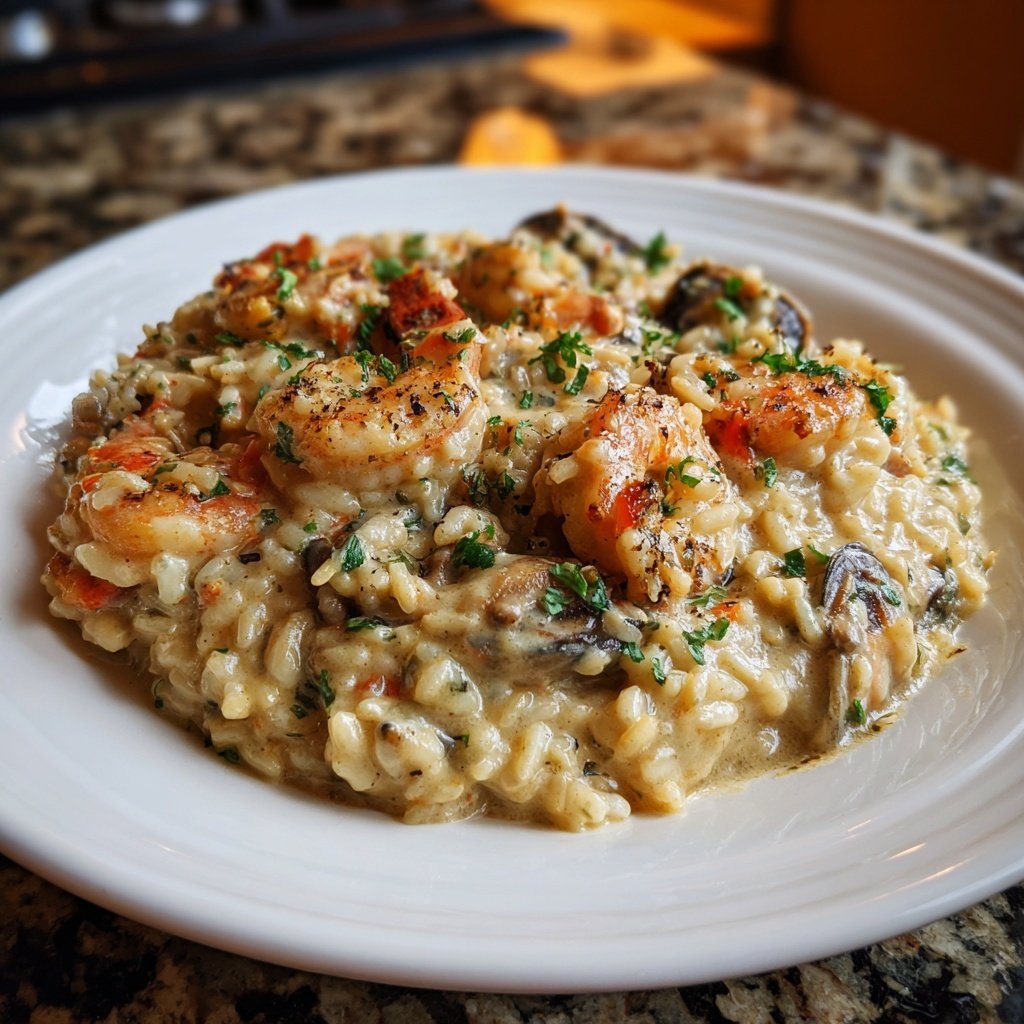
For an elegant touch, serve your seafood risotto in wide, shallow bowls to highlight the creamy texture and colorful seafood. A light drizzle of high-quality olive oil over each serving can enhance the flavors beautifully. Pair it with a crisp green salad and a chilled glass of white wine for a truly refined dining experience.
If you're looking to elevate the dish further, consider adding a sprinkle of lemon juice right before serving. The acidity brightens the flavors of the seafood and balances the richness of the risotto. You could also top it with some microgreens or edible flowers for a stunning presentation.
Make-Ahead and Storage Tips
While seafood risotto is best enjoyed fresh, you can prepare components in advance. Cook the risotto and seafood separately; store them in airtight containers in the refrigerator for up to two days. When ready to serve, gently reheat each component in a pan over low heat, adding a splash of broth to restore creaminess.
If you have leftovers, be cautious with reheating, as risotto can dry out. Add some broth or water and stir frequently to revive its original creamy texture. If you want to freeze any leftovers, keep in mind that the texture may alter dramatically, so it’s best to consume refrigerated risotto within a couple of days.
Common Troubleshooting
If your risotto turns out too thick, it's likely that you didn't add enough broth gradually. Always incorporate the broth ladle by ladle, ensuring the rice absorbs it before adding more. If the risotto seems too soupy, let it simmer uncovered for a few minutes to reduce the liquid further, stirring constantly for even cooking.
In case your seafood becomes rubbery, it could be due to overcooking. Pay close attention to the cooking times for shrimp, mussels, and squid, as they cook quickly. Aim to add the seafood in the final stages of cooking, so they remain tender and perfect in texture.
Questions About Recipes
→ Can I use frozen seafood?
Yes, frozen seafood can work, but make sure it's thawed and drained before using.
→ What type of white wine is best for risotto?
A dry white wine like Sauvignon Blanc or Pinot Grigio works well in this dish.
→ Is Arborio rice the only type of rice for risotto?
Arborio is the most common, but you can also use Carnaroli or Vialone Nano for a different texture.
→ Can I make this risotto ahead of time?
Risotto is best served fresh, but you can prepare the base ahead of time and add seafood when ready to serve.
Seafood Risotto with White Wine
Created by: Charity Bowen
Recipe Type: Global Feast Collection
Skill Level: Intermediate
Final Quantity: 4 servings
What You'll Need
For the Risotto
- 1 cup Arborio rice
- 4 cups seafood broth
- 1/2 cup white wine
- 1 onion, finely chopped
- 2 cloves garlic, minced
- 2 tablespoons olive oil
- 1 cup shrimp, peeled and deveined
- 1 cup mussels, cleaned
- 1/2 cup squid, sliced
- 1/4 cup grated Parmesan cheese
- Salt and pepper to taste
- 1 tablespoon lemon zest
- Fresh parsley, chopped for garnish
How-To Steps
In a saucepan, heat the seafood broth over low heat to keep warm.
In a large pan, heat the olive oil over medium heat. Add the chopped onion and sauté until translucent, about 5 minutes. Stir in the garlic and cook for an additional minute.
Add the Arborio rice to the pan and cook for 2-3 minutes until the rice is slightly toasted, stirring frequently.
Pour in the white wine and let it simmer until mostly absorbed, stirring frequently.
Begin adding the warm seafood broth, one ladle at a time, stirring continuously. Wait until the liquid is mostly absorbed before adding more. This process should take about 20-25 minutes.
When the rice is creamy and just al dente, add the shrimp, mussels, and squid. Cook for an additional 5-7 minutes until the seafood is cooked through.
Remove the pan from heat and stir in the grated Parmesan cheese, lemon zest, salt, and pepper. Adjust seasoning to taste.
Garnish with fresh parsley and serve hot.
Extra Tips
- For an extra layer of flavor, consider adding saffron while cooking the broth. Also, make sure to use good quality seafood for the best results.
Nutritional Breakdown (Per Serving)
- Calories: 450 kcal
- Total Fat: 15g
- Saturated Fat: 3g
- Cholesterol: 150mg
- Sodium: 750mg
- Total Carbohydrates: 58g
- Dietary Fiber: 2g
- Sugars: 2g
- Protein: 20g